Skip to content

San Marco · Jacksonville, Florida 32207

Monday–Friday, 7:30 am – 5:30 pm

(904) 893-3248
Sub-Zero Service San Marco
Menu

The Sub-Zero Line · 700 Series

Sub-Zero 700 Series Repair in San Marco

The line that taught the kitchen to hide its refrigeration — and the line we know panel by panel in San Marco's oldest houses.

Sub-Zero Service San Marco repairs the original 700 Series integrated line — 700TC combos, 700BR drawers, and 736 units built 1994 to 2015 — throughout San Marco and San Jose, ZIP codes 32207 and 32217. Drawer slides, fill faults, and defrost icing dominate the calls and resolve between $300 and $1,200.

For Sub-Zero repair across San Marco and the river streets, ring the workshop at (904) 893-3248 or book online.

Series notes current as of 13 June 2026

(904) 893-3248 · Monday–Friday, 7:30 am – 5:30 pm

The Lineage

What Made the 700 Series Different?

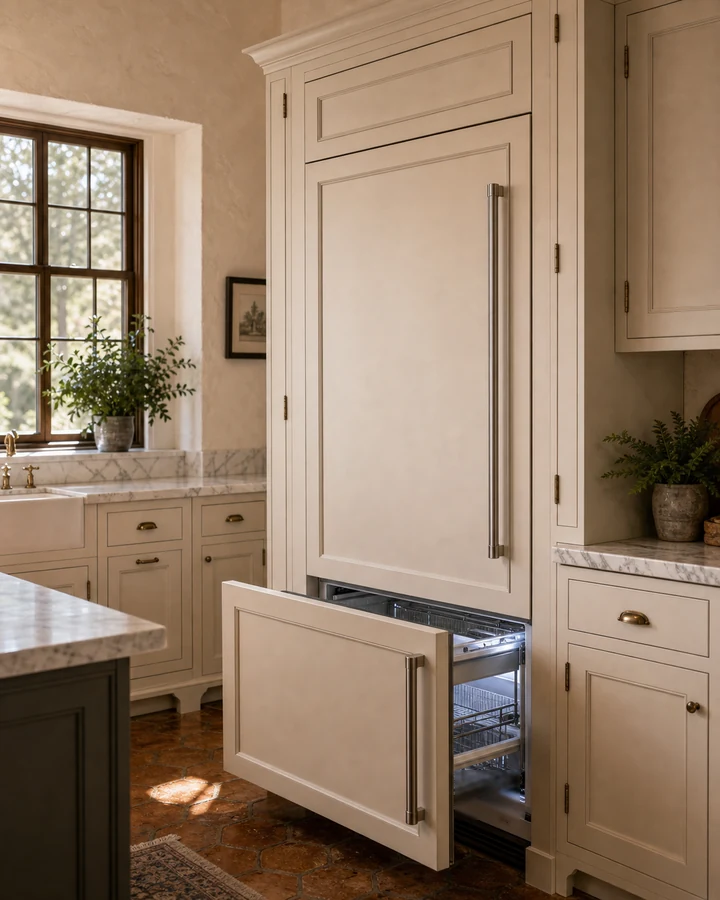
When the Sub-Zero® 700 Series arrived in 1994, it rewrote what a luxury refrigerator was supposed to look like: nothing. The integrated, panel-ready design let the appliance vanish into the cabinetry, accept a custom face, and sit flush with the surrounding millwork. For San Marco's restored kitchens — where the cabinet run is often the most valuable object in the room — that disappearing act was the entire appeal, and it remains the reason these units are still in service three decades on.

The line was broad. The 700TC and 700TR tall units carried the load through 2015; the 700BR, 700BF, and 700BC base drawers handled refrigerated and frozen storage beneath islands; the later 736 family brought a 27-inch width to the same vocabulary. Each shares the integrated logic, and each ages on the same timeline — slides and seals first, fill systems and boards next, the sealed system last. Sub-Zero Service San Marco repairs all of them throughout 32207 and 32217; the workshop line is (904) 893-3248, and visits can be requested through our online booking page.

The integration that owners love is exactly what keeps amateurs out. A misjudged panel pull on a 700TC can wreck a custom face that no supplier can reorder, and the hinge geometry must be recalibrated to the millimeter when the door goes back. That is the line between a confident repair and an expensive lesson.

Sub-Zero 700TC tall combination unit set flush into original 1920s cabinetry in a San Marco kitchen

The Ledger

Complaint, First Inspection, and Cost Lane

Working ranges drawn from our own 700-series invoices across San Marco and San Jose — figures that follow a diagnosis, not quotes that precede one.

The complaint Where we look first Cost lane
Drawer binds, grinds, or rides crooked Slide bearings and the drawer gasket on 700BR/700BC bases $300–$600
Ice maker fills short or floods the tray Fill tube alignment and the inlet valve — a documented 700 weak point $300–$650
Frost building on the drawer evaporator Defrost heater and thermostat, then the door seal for humid air $450–$900
Display dark or unresponsive after a storm Control board and its serial-range part match, surge history noted $550–$1,200
Compartment warm, frost only partial on the coil Refrigerant pressure — the sealed system, quoted on evidence alone $1,500–$3,000

Matters of Record

Three Facts Worth Keeping About the 700 Line

The original 700 line ran 1994 to 2015

That is twenty-one model years across the 700TC, 700TR, 700BR, 700BF, and 736 families, which means the oldest units in San Marco kitchens are now past thirty. Parts compatibility varies by serial range — a board for a 1996 unit will not serve a 2012 one — so identification precedes every order.

The replacement path is the Designer DET and DEC line

Sub-Zero's own cross-reference points a retired 700 toward the current Designer columns. In a kitchen with custom panels, that swap means new carpentry, which is why a sound 700 is so often worth repairing — the cabinet, not the compressor, drives the decision here.

A Sub-Zero is built for twenty years and routinely exceeds it

The manufacturer engineers to a two-decade standard, and well-maintained 700 units in San Jose and along the river run well beyond it. A repair on a cabinet this age is not life support; it is the appliance finishing the service life it was designed to deliver.

The Catalog

The 700 Family by Variant and Year

One vocabulary, many bodies. Identifying the exact variant — and its production span — is the first step in every 700 repair, because parts track the serial range, not the family name.

Variant Configuration Production span
700TC(I) Tall combination — refrigerator over freezer 1994–2015
700TR / 700TF Tall all-refrigerator / all-freezer columns 1994–2013
700BR / 700BF Base refrigerator / freezer drawer units 1994–2013
700BC Base combination drawers 2004–2013
736TC(I) / 736TR / 736TFI 27-inch tall combo, refrigerator, and freezer 2004–2014

Diagnostic Tells

What an Aging 700 Tells You First

A 700 ages in a predictable sequence, and reading the order saves both money and surprise. The mechanical wear arrives long before anything electronic, and the cabinet itself usually speaks before the display does.

  1. First, the slides. A drawer that grinds, drags, or rides crooked is the earliest 700 tell — bearings drying after a decade of daily pulls, and the cheapest moment to act.
  2. Then, the seals. Riverfront humidity stiffens gaskets; a drawer or door that no longer closes flush lets warm air in and frosts the compartment.
  3. Then, the fill system. Short or flooding harvests on an integrated unit point to level and tube alignment as often as to the inlet valve itself.
  4. Then, the board. A dark or erratic display, especially after a storm, means a serial-matched control board — and on flood-era units, possible latent corrosion from Irma’s 2017 water.
  5. Last, the sealed system. A partial frost line and a warm compartment move the job to the refrigerant bench, quoted only on evidence.

Honor that order and a 700 rarely surprises you. Skip it — chase the board while a binding drawer has crept the cabinet out of level — and the diagnosis goes sideways fast. The same sequence governs the drawer-unit defrost faults that bring most 700s to our attention.

Case Notes

A 736 in San Jose, Read Before a Part Was Ordered

Educational diagnostic scenario

Consider a 27-inch 736TC in a San Jose kitchen remodeled around the original 1990s cabinetry. The complaint arrived doubled: a drawer that ground on its slides and an ice maker producing half-trays. A novice might treat those as two unrelated jobs and two part orders. The bench tells a tidier story — the binding drawer had crept the unit a few millimeters out of level, and an out-of-level 700 ice maker fills short because the tube no longer aims true.

Re-leveling the cabinet, fitting fresh slides, and realigning the fill tube resolved both symptoms in one visit, well inside the moderate cost lane. Had the fill complaint been chased first, a perfectly good inlet valve would have been replaced for nothing. The lesson the 700 line keeps teaching: ice maker faults on an integrated unit are often geometry, not electronics, and the cabinet is part of the diagnosis.

The Houses

Where the 700 Series Still Lives in San Marco

The 700 line landed in San Marco during the 1990s remodel wave, when owners along Granada and River Road updated 1920s kitchens without surrendering the original casework. Those installs are now the units we see most: flush columns and base drawers worked into millwork half a century older than the appliance, in houses that prize the cabinet above the machine. Many of these kitchens also took water when Irma pushed the river over its banks in 2017, and a 700 board that survived that flooding can corrode quietly for years — a slow failure we documented in the journal's storm entry.

When a 700 finally needs more than slides and seals, the work moves to the sealed-system bench, where refrigerant repairs are proven before they are priced, or toward the Designer columns that succeeded the line. Either way, name the model and serial off the interior tag when you ring (904) 893-3248 — on a line this long-lived, the right part begins with the right number.

Arrange a Visit from the Workshop

Weekday appointments across San Marco, San Jose, and Epping Forest — gate clearance arranged before we arrive.

(904) 893-3248 · Monday–Friday, 7:30 am – 5:30 pm

Correspondence

700 Series Questions from the Bench

How do I tell a 700TC from a later Designer or BI built-in?

Look for a fully flush face with no protruding grille and a model tag inside the upper compartment beginning 700, 736, or IC. The original 700 line ran 1994 to 2015 and pioneered the integrated, panel-ready look. The later Designer columns carry IT, IC, ID, DET, or DEC tags, and the Classic BI cabinets sit slightly proud with a visible top grille.

My 700-series drawers stick and grind when I pull them — is that serious?

It is wear, not catastrophe, but worth addressing before it spreads. The drawer slides on the 700BR and 700BC units carry more weight than owners expect, and after a decade of daily use the bearings drag and the seals harden. Caught early it is a clean slide-and-gasket job in the $300 to $600 range; ignored, a binding drawer eventually misaligns the seal and lets the compartment warm.

Are control boards still available for a 1990s 700 unit?

Some are new old stock; some are rebuilt; a few are scarce enough that we source and test before promising a date. The 700 line spanned twenty-one model years, so a 1996 700TR and a 2012 736TC do not share electronics. We identify the exact board by the unit’s serial range first, tell you honestly whether it is a stock part or a rebuild, and never order blind.

Can a panel-ready 700 be serviced without pulling the cabinet apart?

Almost always. The integrated design that makes these units beautiful also makes them serviceable in place once you respect the panel and hinge geometry. We index the overlay panel before removal, protect the surrounding casework, and rehang it to its original reveal. In a San Marco kitchen where the cabinet face was built by hand, that discipline is the whole point of calling a specialist.

When does it make sense to replace a 700 rather than repair it?

When several systems fail together on a cabinet whose panels would not survive removal anyway, or when the sealed system has gone on a unit already tired everywhere else. Short of that, repair almost always wins here, because the official replacement path runs to the Designer DET and DEC line, and refitting a flush column into 1920s millwork is carpentry no one enjoys paying for.

What is the difference between the 700TC, 700TR, and 700BR variants?

The suffix names the configuration. The 700TC is the tall combination — refrigerator over freezer in one column — and ran 1994 to 2015. The 700TR is the tall all-refrigerator, and a matching 700TF handles all-freezer, both built 1994 to 2013. The 700BR and 700BF are the base drawer units that tuck under an island, with the 700BC a combination drawer. They share the integrated logic but not every part, so the exact tag still governs the order.

Why does my 700TC ice maker flood the tray instead of filling it cleanly?

On the 700 line an overfilling ice maker is usually geometry before electronics. If the cabinet has crept out of level — often because a binding drawer or a settled floor nudged it — the fill tube no longer aims true and water overshoots the mold. We level the unit, realign the fill tube, and verify the inlet valve before assuming the valve is at fault. Chasing the valve first on a 700 replaces a perfectly good part for nothing.

Is the 736 the same as a standard 700, or a different repair?

It is the 700 vocabulary in a narrower 27-inch body, introduced in the mid-2000s — the 736TC combo, 736TR, 736TFI, and the related IC-27 columns running into the early 2010s. The faults rhyme with the wider 700s: slides, fill systems, defrost, and boards. What differs is the parts catalog, because a 736 board and a full-width 700TC board are not interchangeable, so we confirm the model and serial before sourcing anything.